

Why Does My New Disposable Vape Taste Burnt? Causes, Fixes, and When to Replace It
Aug. 21, 2026
00:00:09
A disposable vape tastes burnt when the heating area becomes hotter than the available liquid can support. The battery may still activate and vapor may still appear, but that does not mean atomization is normal. A brief dry note may improve after cooling and liquid redistribution. A persistent scorched taste usually points to restricted liquid flow, excessive heat, or damage around the coil. An atomizer depends on both a heating element and an oil-conducting material, so power alone cannot maintain normal vapor production.
Buddacana supplies wholesale vape hardware for nicotine and oil-based projects. Buyers need to match the liquid, heating structure, resistance, voltage, airflow, filling process, and intended draw pattern before selection. Its product pages state that the vape pens are supplied empty for wholesale and OEM projects, making formulation-to-hardware validation part of the buyer’s responsibility.
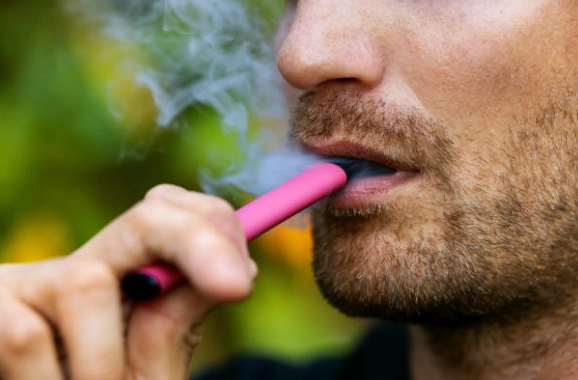
Can a Disposable Vape Taste Burnt and Still Work?
Separate electrical operation from correct liquid delivery. A device can continue firing while the heating surface is too dry, so “working” and “working correctly” are different judgments.
Electrical Operation Does Not Confirm Normal Atomization
An airflow sensor can trigger the control circuit and send current to the atomizer even when liquid is not reaching the heating area fast enough. The coil produces heat and some vapor, but the flavor becomes dry or scorched. This explains why a disposable vape tastes burnt but has juice: liquid remains in the reservoir, yet local supply around the coil is inadequate.
Temporary Dryness and Permanent Coil Damage
Temporary dryness can follow repeated draws or slow liquid movement. Resting the device may let liquid return to the wick or porous ceramic. Porous ceramic relies on micropores, surface tension, and capillary action to distribute liquid around the heating area. A scorched wick is different. Once the oil-conducting material has burned, repeated activation will not restore it.
Persistent Burnt Flavor as a Stop-Use Signal
Stop if the burnt taste remains after cooling, the body becomes unusually hot, or the flavor turns plastic-like, chemical, or metallic. Do not open, pierce, refill, or repeatedly fire a sealed disposable. See Can a New Disposable Vape Taste Burnt and Still Work? for the difference between electrical function and flavor failure.
Why Does a Brand-New Disposable Vape Taste Burnt?
A first-puff problem usually comes from liquid distribution, heat input, or a mismatch between the formulation and hardware. Diagnose the cause before treating every burnt note as a battery defect.
Incomplete Liquid Saturation or Restricted Liquid Flow
A reservoir can appear full while the ceramic heating surface remains under-supplied. Air pockets, cold storage, thick formulations, or an oil path that cannot replenish the heating area quickly enough may all cause a burnt first draw.
For factory-filled oil-based hardware, keep the device upright for at least 30 minutes after filling and capping before the first activation test. More viscous formulations may require several hours of priming, and some hardware filling procedures extend this window to as long as 12 hours. The required time should be confirmed with the actual oil rather than shortened to meet production speed.
Viscosity should also be recorded at a controlled oil temperature. There is no universal cP limit that applies to every ceramic coil because flow behavior changes with formulation, temperature, inlet-hole geometry, ceramic porosity, resistance, and voltage. The practical viscosity threshold is the highest viscosity that can fully saturate the ceramic and replenish the heating area between the defined test draws without producing a dry note.
For example, the YCC25-067 uses four 1.8mm oil holes with a full ceramic coil. Larger inlet openings generally support thicker oils, while smaller openings help control faster-flowing oils. However, four 1.8mm holes do not prove compatibility by themselves. If bubbles remain nearly stationary, the oil does not recover around the coil between draws, or a burnt taste appears at the lowest voltage after full priming, the formulation should be treated as outside the validated wicking range for that hardware.
For B2B qualification, record the oil temperature, upright resting time, selected voltage, draw duration, interval between draws, and number of consecutive draws. This turns “the disposable vape tastes burnt” from a subjective complaint into a repeatable hardware-and-formulation compatibility result.
Excess Heat from Long or Repeated Draws
Long draws and rapid repeated use can vaporize liquid faster than the wick can replace it. Vapor may become warmer, weaker, and then burnt. A harder draw is not a reliable fix because airflow and liquid supply need time to recover. Pause before one moderate retest.
Mismatched Liquid, Coil, Voltage, and Airflow
Resistance, voltage, airflow, and viscosity work as one system. Higher voltage heats faster and can increase vapor output, but it also raises liquid consumption and local heat. Lower voltage gives slower heating, which may suit heat-sensitive formulations, although too little heat can produce weak atomization.
Hardware should be tested with the actual formulation rather than selected by one specification. A large oil hole cannot compensate for unsuitable power, and lower voltage cannot correct a liquid that does not move through the ceramic structure properly.
How Can You Diagnose and Fix the Burnt Taste Safely?
Readers asking how to tell if a disposable vape is burnt need a clear replacement boundary. If a disposable vape tastes burnt, use low-risk checks rather than trying to repair a sealed unit.
| Flavor or Behavior | Likely Direction | Practical Response |
|---|---|---|
| Dry after repeated draws | Temporary liquid starvation or excess heat | Cool and retest once |
| Burnt from the first draw | Poor saturation, mismatch, or damage | Replace or report |
| Burnt while liquid remains visible | Liquid is not reaching the coil | Do not keep firing |
| Chemical, plastic, or metallic note | Material, formulation, or internal fault | Stop using |
| Muted without scorching | Low battery, airflow restriction, or condensation | Check charging and airflow |
Burnt, Chemical, Metallic, and Muted Flavor Clues
A burnt flavor resembles scorched cotton or overheated sweetener. A chemical or plastic-like note is not normal break-in. Metallic taste can point to abnormal heating or internal contact. Muted flavor alone may come from low power or restricted airflow rather than a burnt coil disposable vape.
A buyer reviewing customer complaints should record the exact flavor description. “Weak,” “dry,” “burnt,” and “chemical” suggest different failure directions and should not be grouped into one generic taste complaint.
Cooling, Upright Resting, and Controlled Retesting
For anyone asking how to make a disposable vape not taste burnt, the safe steps are limited: stop, let it cool, keep it upright, remove dust from the mouthpiece and external air inlet, and recharge normally if power is low. Then take one moderate test draw.
Do not use repeated dry pulls, continuous firing, or device disassembly as repair methods. These actions can add heat without improving liquid delivery.
When Troubleshooting Will Not Restore the Device
Replace the unit if the taste returns immediately, charging makes no difference, the shell or port is damaged, or the device heats abnormally. A scorched oil-conducting material cannot be repaired from outside a sealed device.
For a new product, a burnt first draw should also be logged against the batch, filling date, storage condition, and formulation. This information is more useful to a supplier than a general statement that the device “tastes bad.”
Which Hardware Features Can Reduce Early Burnt Taste?
If a disposable vape tastes burnt across a production batch, buyers should look beyond user behavior. Compare formulation, liquid delivery, resistance, voltage, and airflow.
Adjustable Power and Airflow for High-Puff Devices
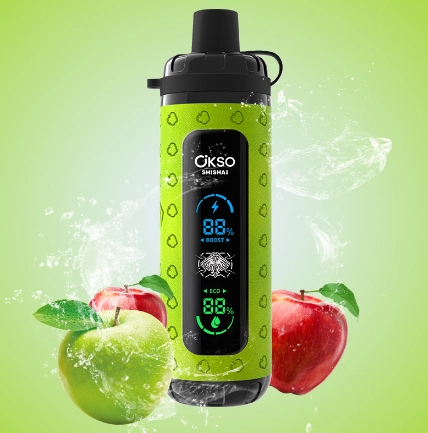
The OKSO Shisha Max 40k is aimed at high-puff nicotine-style projects. Its listed configuration includes a 0.6Ω mesh coil, 800mAh battery, Type-C charging, LED display, power adjustment, adjustable airflow, child lock, 36ml e-liquid reference capacity, and up to 40,000 puffs.
The controls support heat and airflow trials but do not replace formulation testing. Buyers should test the lowest practical power, normal draw duration, repeated use, and recovery time between draws before confirming a production setting.
Ceramic Heating and Wider Liquid-Delivery Options
The YCC25-067 is empty oil-based hardware, not a direct alternative to a nicotine high-puff device. It has 3ml or 4ml capacity, a 280mAh battery, 1.4Ω resistance, four 1.8mm oil holes, 2.8V, 3.2V, and 3.7V settings, Type-C charging, digital display, and preheat.
These variables support trials with the intended oil. A brand can compare flavor at each voltage, observe whether preheat improves initial liquid movement, and check whether repeated draws outpace the four oil holes. The largest voltage setting should not automatically become the default.
Low-Voltage Postless Hardware for Heat-Sensitive Formulations
The HOT UNIT 238 offers another test direction. This empty postless ceramic-coil device provides 1ml or 2ml capacity, a 280mAh battery, 1.8Ω resistance, 1.8V, 2.0V, and 2.2V settings, Type-C charging, button and inhale activation, digital display, and preheat.
Its lower voltage range can be evaluated where less initial heat is preferred, subject to viscosity and draw testing. It fits projects that need a smaller oil capacity and want to compare low-voltage behavior before moving to stronger heat output.
When Should You Replace the Device or Contact the Supplier?
One failed unit and a repeated batch complaint require different responses. The same complaint should lead to a user response and a traceable quality-control review.
Clear Return and Replacement Criteria
Return or replace a new unit when the burnt taste starts immediately and remains after resting, when abnormal heat appears, or when chemical, plastic, or metallic notes are present.
Keep the packaging, production code, purchase record, and a short failure description. This helps separate an isolated fault from a batch pattern. For distributor complaints, also record the flavor, voltage setting, draw frequency, filling date, and storage condition.
B2B Compatibility and Quality-Control Checks
For wholesale projects, check heating-wire resistance, atomizer power, current, battery leakage, internal resistance, charging current, aging behavior, output voltage, smoking function, and pre-delivery samples. These checks are included in the supplied atomizer and battery inspection processes.
Add first-draw, repeated-draw, storage-position, and post-charge flavor tests using the intended formulation. A puff figure or coil label alone cannot predict return rates. The same device may behave differently when oil viscosity, voltage, filling level, or draw pattern changes.
Buddacana Service, OEM Support, and Contact
Buddacana can compare high-puff nicotine, ceramic oil, and lower-voltage postless formats. Buyers should provide liquid type, viscosity, target capacity, activation method, voltage preference, packaging needs, order quantity, and destination-market requirements.
When a disposable vape tastes burnt, do not keep firing it. Separate temporary liquid starvation from coil damage. For procurement teams, reduce repeat complaints by matching formulation to resistance, voltage, airflow, heating structure, filling conditions, and batch testing. Select the model that passes the intended-use test.
Need help comparing oil compatibility, voltage, capacity, or activation options? Share the formulation type, target market, device format, and required documents through Buddacana’s contact channel. This makes sampling more precise before a bulk order.
FAQ
Is it bad to hit a burnt disposable vape?
If the burnt taste persists after cooling, stop using it. Continued activation can keep overheating a dry or damaged heating area. Replace the device if the flavor remains scorched or the body becomes unusually hot.
Why does my disposable vape taste burnt even though it still has liquid?
Visible liquid does not prove that it is reaching the coil. An air pocket, thick formulation, restricted oil path, unsuitable storage position, or damaged wick can leave the local heating area dry.
Can the problem go away if a disposable vape tastes burnt after charging?
Charging may help when low power causes weak vapor, but it cannot repair a scorched wick. If the disposable vape tastes burnt after charging, cooling, and one controlled retest, replace it or report the batch.
HOT INVESTMENT IN ALL
REGIONS OF THE WORLD
REGIONS OF THE WORLD


