

What Are the Durability Ratings of Puffs When Used Frequently and Intensively? A B2B Hardware Reliability Guide
Aug. 06, 2026
00:00:34
High-capacity disposable vapes have shifted market expectations, moving standard devices from 2,000-puff hardware up to 50,000-puff systems. However, for distributors and retailers, advertised puff counts often create customer friction when devices fail before the e-liquid is depleted. When evaluating puffs durability ratings under continuous daily use, hardware performance depends entirely on internal component engineering rather than marketing claims.
As a specialized B2B vape hardware distributor and OEM/ODM manufacturer, Buddacana analyzes physical failure modes across high-volume production batches. By evaluating heating element thermal thresholds, battery discharge stability, and aerosol condensation paths, business buyers can select reliable hardware that protects brand equity and reduces retail return rates.

Why Do High-Puff Disposables Fail Under Frequent and Intensive Use?
Transitioning from light daily vaping to high-frequency chain vaping exposes structural limits in standard disposable architecture. When a device undergoes repeated draws without extended rest periods, internal heat builds rapidly, triggering several hardware failures.
The Hidden Engineering Risks of Burnt Coils and Sudden Battery Drop-Off
The primary driver of early device death is premature wick scorching. During fast, back-to-back draws, liquid delivery through the cotton wick struggles to keep pace with heating wire temperatures. If the wick dries out for even a second, the cotton singes, permanently corrupting flavor. Simultaneously, low-grade lithium batteries experience voltage collapse under constant power demand. As voltage drops, the battery fails to deliver sufficient current, leaving usable e-liquid trapped inside an unpowered device.
How Continuous Heating Degrades E-Liquid Vaporization and Component Seals
Heat accumulation within compact chassis designs alters e-liquid viscosity. As temperatures rise inside the reservoir, the liquid thins out, moving past standard silicone gaskets more easily. This heat transfer degrades internal O-rings and sealing caps. Over extended sessions, thinned e-liquid flows into the central airflow column rather than staying in the absorption chamber, creating spit-back or total leakage onto the lower sensor board.
The Cost Impact of Early Hardware Failure on Wholesale Return Rates
For wholesale buyers, hardware instability directly harms profit margins. When retail customers experience burnt draws or dead batteries on high-capacity units, devices are returned to shop owners. These complaints move up the supply chain, resulting in chargebacks, inventory write-offs, and strained buyer-distributor relationships. Securing hardware rated for intensive use is a financial necessity for brand retention.
What Hardware Factors Determine Actual Durability Ratings in Vapes?
Evaluating hardware durability requires looking past external shell design and auditing internal component choices. Real-world longevity comes down to how well the heating system, airflow channel, and power management architecture handle repeated thermal stress.
Advanced Heating Coils vs. Traditional Single-Wire Structures
Traditional single-wire coils concentrate thermal stress on a tiny surface area, causing rapid hotspot creation during prolonged draws. Modern heavy-duty units replace single wires with dual mesh (0.8Ω+0.8Ω) or triple mesh (0.2Ω–0.6Ω) configurations. Spreading current across an expanded surface area lowers localized temperatures while producing consistent vapor. Pairing these coils with pure cobalt high-density soft-pack batteries ensures consistent current delivery throughout hundreds of charge cycles without thermal degradation.
Precise Airflow Engineering and Condensation Management Systems
Managing aerosol condensate prevents flooding in high-capacity devices. Advanced designs incorporate multi-layer silicone sealing gaskets combined with a 15–18μm porosity mesh inlay inside the chimney. This structural barrier traps excess liquid droplets while allowing vaporized aerosol to pass freely. Anti-spitback intake paths redirect pooling liquid away from the automatic draw sensor, preserving switch sensitivity over months of daily operation.
Smart MCU Chips and AI Power Control for Voltage Stabilization
Unregulated disposables output high wattage on a fresh charge but weaken as battery voltage drains. Heavy-duty hardware relies on intelligent MCU power regulation. These microcontrollers monitor real-time coil resistance and battery voltage, adjusting output wattage dynamically. By preventing power spikes when full and boosting voltage when low, the MCU prevents dry hits down to the final drop of e-liquid. Digital screen displays track real-time oil and power levels so users avoid dry hits.
How Can Procurement Managers Benchmark Hardware Reliability Before Placing Bulk Orders?
B2B buyers need clear evaluation metrics to filter out unreliable suppliers before issuing purchase orders. Establishing a pre-procurement testing protocol avoids importing inventory prone to high defect rates.
Evaluating Real-World E-Liquid Reservoir Capacity Against Battery mAh Ratios
A common issue in high-puff devices is a mismatch between juice capacity and battery sizing. Large e-liquid reservoirs (18mL to 40mL) require robust power backing. Hardware utilizing 650mAh to 1,100mAh rechargeable Type-C cells allows users to cycle through total liquid volumes without losing battery capacity. If a 30mL reservoir is paired with an underpowered, non-rechargeable cell or low-grade battery chemistry, the hardware will fail prematurely.
Reviewing Factory Quality Assurance Standards and FDA Testing Frameworks
Sourcing high-reliability hardware means checking factory-level quality protocols. Procurement teams should require evidence of Incoming Quality Control (IQC) on raw materials, particularly resistance testing on incoming coil wire batches. Final Quality Control (FQC) must include vacuum-pressure leakage testing, battery cell aging tests, and simulated drop testing to guarantee structural integrity during transit and heavy daily handling.
Analyzing Market Case Studies and Benchmark Research for Heavy Vapers
Reviewing real-world field data provides invaluable insights into hardware failure points. Independent lab teardowns and user usage stress tests highlight how different coil alloys and casing materials withstand chain vaping conditions. For a detailed breakdown of field-tested hardware metrics under heavy daily loads, review our puffs durability ratings analysis to inform your technical selection process.
Which High-Durability Devices Match Intensive Vaping Scenarios?
Matching specific client use cases to the correct device spec ensures end-user satisfaction. For markets where consumers demand high daily output without performance loss, two hardware configurations stand out.
Heavy-Duty Performance Choice: Dual Mesh and AI Power Regulation
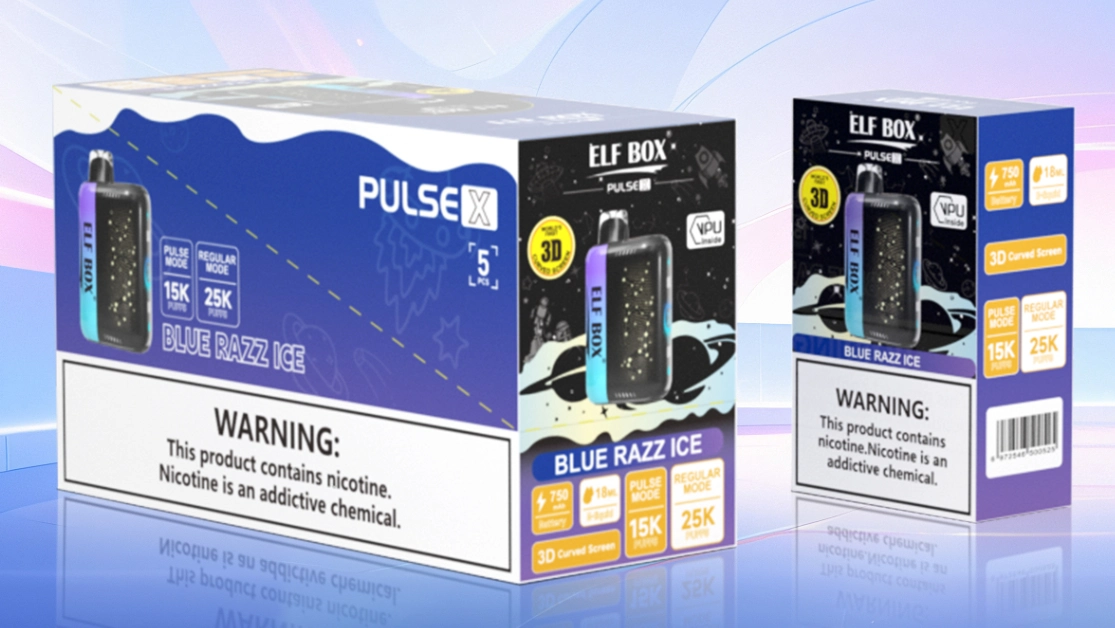
For users needing consistent flavor during frequent daily sessions, the ELF BOX PULSE X 25k Vape provides a balanced engineering setup. Built with an 18mL e-liquid capacity, a dual mesh coil system (0.8Ω+0.8Ω), and a 3D curved display screen, this model integrates an advanced VPU chip with AI power adjustment. The dual-mesh structure alternates thermal loads between coils during continuous use, preventing heat buildup and maintaining consistent flavor profiles across its 25,000-puff lifespan.
Ultra-High-Capacity Enterprise Choice: Triple Mesh Engineering for Extreme Lifespan
When targeting high-volume consumers who require maximum usage longevity, the High-Durability 50k Puff Hardware offers an industrial-grade solution. Featuring a 40mL e-liquid reservoir and an 1,100mAh rechargeable pure cobalt battery, this hardware utilizes a triple mesh coil structure (0.2Ω–0.6Ω). The triple-mesh setup distributes heat across three distinct heating zones, ensuring the e-liquid atomizes cleanly without thermal degradation over extended operational cycles.
How Does Buddacana Support Wholesale Partners with Custom OEM/ODM Services?
Selecting the right hardware design is only half the battle; maintaining manufacturing consistency across thousands of production units is equally critical for commercial success.
Comprehensive Manufacturing Capabilities and Rigorous Quality Control
Buddacana operates dedicated automated assembly lines focused on OEM and ODM production for international distributors. Every manufacturing run undergoes strict quality checks, including automated resistance verification, high-temperature storage testing to verify seal integrity, and battery aging cycles. These steps keep defect rates far below industry averages, preserving margin predictability for wholesale partners.
End-To-End Logistics, Compliance Support, and Inquiring for Custom Hardware
Navigating regional regulatory requirements and import logistics requires specialized support. Buddacana provides full compliance documentation for target destination markets, ensuring smooth customs processing. To discuss customized shell branding, proprietary coil tuning, or bulk wholesale allocations tailored to your market’s specific puffs durability ratings requirements, reach out to our engineering and sales teams through our official contact portal to start your technical inquiry.
FAQ
Q: What factors affect puffs durability ratings under frequent daily use?
A: Hardware durability depends on coil heat dissipation, battery cell quality, e-liquid channel sealing, and smart chip voltage control. Dual or triple mesh coils prevent hotspot creation during chain vaping, while high-density pure cobalt batteries ensure stable voltage delivery over extended charge cycles.
Q: Why do high-capacity disposables develop a burnt taste before e-liquid is gone?
A: Burnt flavor occurs when continuous drawing heats the coil faster than e-liquid can saturate the cotton wick. Hardware using single-wire coils or poor wick design scorches the cotton, whereas dual-mesh systems with intelligent MCU wattage regulation adjust heat output to protect flavor integrity.
Q: How do high-capacity devices prevent e-liquid leakage during chain vaping?
A: Heavy-duty devices use multi-layer silicone sealing gaskets, anti-spitback chimney structures, and absorbent internal mesh inlays. These physical barriers capture aerosol condensation and prevent thinned e-liquid from entering the draw sensor or outer chassis during high-temperature sessions.

HOT INVESTMENT IN ALL
REGIONS OF THE WORLD
REGIONS OF THE WORLD


