

Why Is Your Vape Pen Not Working After A Full Charge
Nov. 12, 2026
00:00:27
A customer whose pen fails straight off the charger walks back into the shop, and the shop wants answers from whoever supplied the stock. Repeat complaints follow one bad lot, and the retail account on the other end of them eventually stops reordering without telling anyone why. Every case lands on the same three hardware properties in the end. Contact, heat and charge either hold or they do not, however the unit looks on the counter.
Buddacana builds vaporizers for wholesale accounts, and its assembly lines screen for the faults below one by one. Battery connection, coil resistance and airflow get checked before a unit is packed rather than after a complaint comes back. Hardly any failure a shop counter sees is genuinely mysterious. They fall into six groups, and a staff member who has seen each group twice can name the symptom on sight.
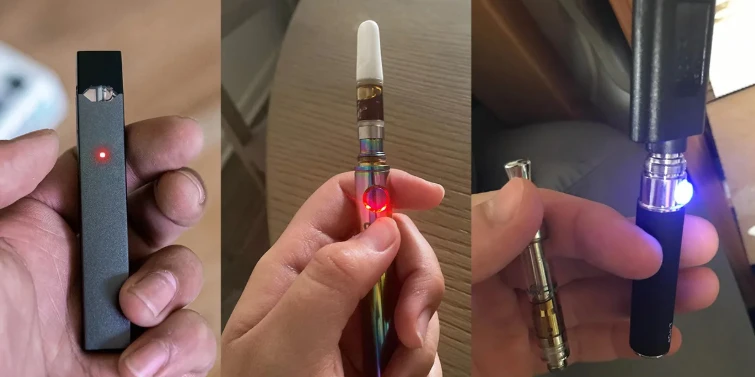
A Fully Charged Vape Pen That Won’t Hit
Full battery, no vapor. That’s the most common complaint and the least mysterious. Three causes: air that can’t get in, oil that can’t reach the coil, or a connection that never closes.
Airflow Blockages
Lint, dust and hardened oil are the usual culprits. The intake holes at the base are small, and once they are blocked the sensor never sees a draw. A pin, a paper clip and one firm pull will do. Most of them come back to life in the shop.
An Empty Tank
An empty tank heats nothing. Fire a dry coil and the cotton or ceramic is gone for good, taste included. A fair share of units written off as dead batteries are just out of oil. Check the tank before you file the claim.
YCC24-021, 8ml Tank
When running dry is the actual complaint, the YCC24-021 handles it, with an 8ml tank on a 400mAh cell at 0.8 ohm, enough volume that a heavy user never needs to refill at lunchtime. The thick vapor comes from that resistance rather than from a bigger battery.
|
Device Model |
Tank Volume |
Battery Size |
Coil Resistance |
Variable Voltage |
|
YCC24-021 |
8ml |
400mAh |
0.8 ohm |
2.8V – 3.2V – 3.5V |
|
Galaxy YCC24-029 |
3ml+3ml |
350mAh |
1.2 ohm |
2.8V – 3.2V – 3.5V |
|
Blast X YCC25-065 |
2ml |
280mAh |
1.2 ohm |
2.8V – 3.2V – 3.5V |
Charged, Lights Up, No Vapor
The lights come on but nothing comes out. That pins the fault to the path between cell and coil, because the electronics are obviously alive. Two things break that path. Only one of them is a factory defect.
The Battery Can’t See the Atomizer
The battery pin has to reach the cartridge base. Screw a cart down hard once and the pin stays down. From then on the next cart floats above the contact, the light comes on, and the heater gets nothing.
A Burned-Out Coil
Cheap coils break at the wire, or burn out under sustained heat. Once the element opens the circuit is dead, and no charge brings vapor back. It’s the common failure in low-cost hardware from factories that test a sample instead of a unit.
Blast X YCC25-065, Ceramic Coil
The Blast X YCC25-065 pairs a 1.2 ohm full ceramic coil with a 2ml tank and a 280mAh cell. Heat does not distort ceramic the way it distorts wire, which keeps the draw consistent over the whole life of the tank.
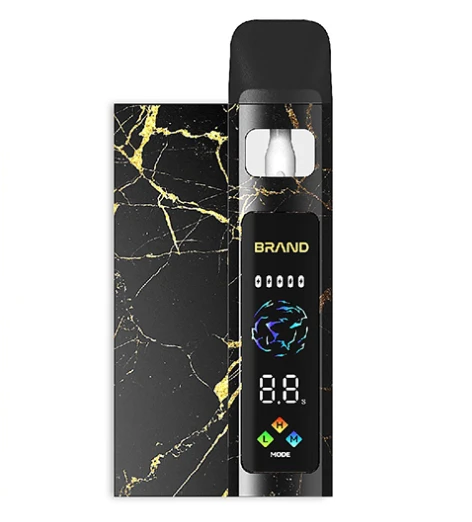
A 510 Thread Battery That Won’t Fire
Separate carts and batteries bring their own failure, and it shows up most in shops that sell the two halves separately. The complaint sounds exactly like a dead battery. The cause sits at the joint.
Sticky Residue on the Pin
Oil seeps from the bottom airflow onto the battery pin. That film insulates, and an insulated pin reads as a dead cell. A cotton swab dipped in isopropyl alcohol cleans both contacts, and the unit fires again after less than a minute of work.
A Pin Pushed Flat
Crank a cart down too hard and the damage it does is permanent. The centre pin on a 510 rides on a spring or a soft washer, so flatten that spring once and every cart fitted after it floats off contact. No cleaning fixes a pin that doesn’t travel.
Galaxy YCC24-029, No Threads
The Galaxy YCC24-029 takes the thread out of the equation. Its 3ml+3ml or 4ml+4ml chambers sit inside the body on a 350mAh cell, so there is no pin left to squash and no thread left to cross. If your returns cluster around 510 connections, that one change removes the category.
Blinking After a Charge
A blinking light carries information rather than reporting a fault. The chip protects the cell and reports which protection fired. Two codes cover most of what a shop sees, and the difference matters. One is a user error. One is hardware.
Three Flashes: a Short
Three to five flashes on most boards means short circuit protection, usually from water in the air path, oil on the board, or a damaged coil, and the device is doing its job. Dry it out or change the cart and the code clears.
The Wrong Resistance
A cart below the resistance the board expects reads as a fault, and the board refuses to fire rather than risk the cell. Match the cart to the battery window. That window is 2.8V to 3.5V on the models above. That removes a whole class of no-fire complaints that look like dead hardware.
What a Screen Tells You
Blink codes ask a user to count flashes and guess. Screens don’t. Several newer models carry a display that shows power left as a percentage and flags a lost atomizer connection. A return turns into a two-second conversation.
|
Indicator Type |
Visual Signal |
Usual Meaning |
|
Standard LED |
3 Flashes |
Short circuit protection active |
|
Standard LED |
10 Flashes |
Battery cell is empty |
|
Digital Screen |
Percentage Number |
Exact power remaining |
|
Digital Screen |
“Check” Warning |
Atomizer connection lost |
Fixing It at the Counter
Most charged-but-dead units are fixable at the counter inside five minutes, which is cheaper than a return and cheaper than a replacement, and the customer stays.
Alcohol on the Contacts
Take a cotton swab with isopropyl alcohol and clean the battery plate and the pod base. Let it dry completely, because alcohol on a live contact is its own problem. Dry contacts fix more no-fire units than anything else on this list.
A Clogged Airflow Tube
Oil that has gone cold blocks the centre tube. Warm the body gently on a hairdryer’s low setting, or hold it in a hand for a minute, and two hard pulls without firing will usually clear the blockage. Pushing a pin down the tube only makes the blockage worse. The airway is narrower than it looks, and a pin will reach the coil long before it reaches the end of the tube.
When the Failure Rate Won’t Move
Troubleshooting at the counter carries a shop only so far. Once the failure rate passes a certain point, the staff minutes cost more than the margin on the hardware, and the complaints reach wholesale buyers who never touched the device. Testing every unit instead of every batch is what moves that rate.
High failure rates are an engineering problem before they’re a support problem. Buddacana supplies exact specifications, custom coil configuration guides and oil compatibility test reports for the liquid in question, worked up against the launch date and the volume. Send the oil details and the target market. The file comes back matched to the hardware.
FAQ
Q: Does a fast charger hurt the battery?
A: It can. A high-voltage adapter forces more current through the charge circuit than that circuit was designed to take, and the chip is what suffers. Stick to a standard output adapter, keep the session short, and do not leave the device plugged in overnight.
Q: What makes a device taste burnt when the battery is full?
A: The coil fired while the wick was dry. Long draws and thick oil don’t give the ceramic time to resoak, so the next pull burns what’s left. Two seconds between draws is the fix.
Q: Why would a brand new pen fail straight out of the box?
A: The wick dried out in storage, a wire took damage in transit, or the coil never passed a unit test in the first place. A factory that tests every device instead of one sample per lot brings that failure rate close to zero.
HOT INVESTMENT IN ALL
REGIONS OF THE WORLD
REGIONS OF THE WORLD


